
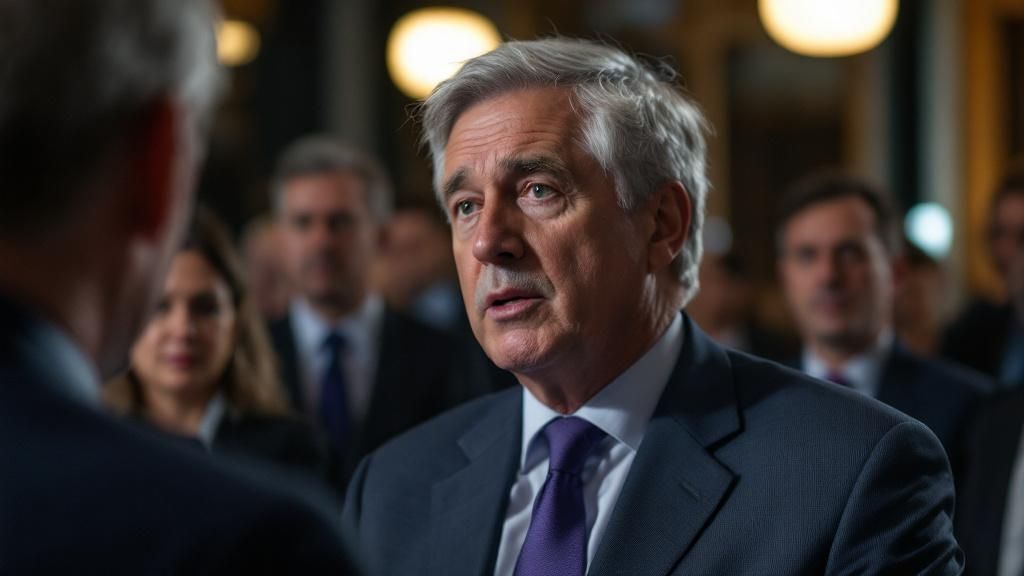
As households nationwide grapple with soaring energy bills and price increases hitting record levels, the opposition figurehead has launched a biting attack on the Prime Minister’s response to the living costs crisis. In a tense Commons clash, the opposition has scrutinised the administration’s inadequate relief measures, calling for more meaningful action to help hard-pressed families. This article examines the escalating tensions surrounding the crisis and explores the competing proposals for economic assistance.
The Opposition’s Critique of State Policy
The leader of the opposition has intensified scrutiny of the government’s response to the mounting cost-of-living emergency, arguing that existing policies fail significantly to addressing the level of hardship affecting UK families. In parliamentary debate, the opposition has presented a thorough analysis encompassing insufficient financial assistance, limited involvement in the energy sector, and a apparent shortage of commitment to combating inflation. The opposition contends that whilst households grapple with record-high bills, the government’s fragmented strategy merely patches symptoms rather than tackling underlying causes of financial hardship.
Central to the opposition’s case is the contention that the government has fundamentally misjudged both the extent and timeframe of the crisis. Opposition officials have highlighted figures indicating that millions of people now endure genuine difficulty, with many obliged to select between warmth and food. The opposition maintains that the government’s initial response underestimated the crisis’s effect, resulting in support mechanisms that proved inadequate when conditions worsened further. This miscalculation, they argue, demonstrates wider shortcomings in economic prediction and policy planning.
Limited Support Systems
The opposition has consistently challenged government support schemes as lacking in scope and precision, maintaining that energy price cap mechanisms fall short of protecting those on lower incomes adequately. Critics point out that whilst the government has introduced various financial interventions, such as grants and council tax rebates, such provisions provide only temporary relief without tackling systemic issues. The opposition contends that eligibility-based assistance remain too restrictive, excluding millions of working families who yet face difficulties with rising costs. Moreover, they argue the government’s approach falls short of the ambition needed to address such an extraordinary financial crisis.
Opposition assessment suggests that current support mechanisms unfairly harm those earning mid-range salaries who fall between eligibility thresholds for means-tested support. The party has put forward new models incorporating universal payments, broadened support schemes, and public sector action in energy markets to stabilise prices. They stress that short-term solutions, albeit positive, do not address fundamental systemic change. The opposition contends that lacking major policy reform and increased public investment, working people will remain subject to significant economic hardship throughout the foreseeable future.
Long-range Financial Strategic Concerns
Beyond urgent crisis response, the opposition has posed key questions regarding the state’s long-term economic direction and competitiveness. Opposition analysts argue that the current approach emphasises short-term political considerations over long-term economic sustainability, possibly undermining Britain’s long-term prosperity. They contend that without deliberate investment in clean energy infrastructure, productive capacity, and skills development, the nation risks prolonged economic stagnation. The opposition emphasises that tackling cost of living challenges requires extensive reforms tackling productive efficiency, creative advancement, and sectoral development alongside urgent relief measures.
The opposition has articulated concerns that government policy is fragmented across different areas, with energy policy, industrial strategy, and fiscal measures operating in isolation rather than as coordinated elements. Critics argue this fragmented approach impedes tackling of persistent inflation and fundamental economic problems. The opposition advocates for a coordinated national strategy encompassing energy transition, manufacturing revival, and skills development. They maintain that real problem-solving demands transformative policy reform rather than gradual modifications to existing frameworks.
Government’s Defence and Counter-arguments
The government has steadfastly defended its economic policy, arguing that the cost of living pressures are chiefly driven by worldwide circumstances beyond direct Westminster oversight. Ministers have emphasised the unprecedented nature of the energy crisis, stemming from international tensions and worldwide supply chain interruptions. They argue that their targeted support packages, including the energy price ceiling and living cost payments, constitute a measured and fiscally responsible approach. The Government Treasury maintains that profligate expenditure could exacerbate inflation even more, compromising sustained economic stability and ultimately damaging the identical households the opposition purports to support.
Government representatives have stressed the substantial financial assistance currently in place, amounting to billions of pounds in immediate aid to low-income families. They argue that their approaches balance immediate relief with responsible financial stewardship, preventing the debt spiral that unchecked spending could trigger. Ministers also point to their efforts in boosting energy security through sustainable energy projects and supply diversification. The government argues that whilst the opposition delivers sympathetic language, their suggested policies lack economic credibility and would prove unsustainable without triggering higher taxes or additional debt.
Furthermore, state representatives emphasise their resolve to confronting underlying economic challenges through output gains and business investment incentives. They argue that enduring recuperation demands systemic economic transformation rather than temporary handouts. The administration believes this approach in the end produces greater prosperity and stability for every citizen.
